

Pennsylvania has been steadily expanding where electronic ID scanning is required for alcohol sales. Between longstanding affirmative defense provisions, newer mandates for amusement parks and ready-to-drink cocktail retailers, and proposed legislation for gun shows, Pennsylvania businesses need to understand both what’s required today and what’s coming next.

Pennsylvania’s Liquor Code provides one of the most detailed affirmative defense frameworks in the country, with three distinct tiers of protection for businesses that verify IDs before selling alcohol.
No penalty shall be imposed on a licensee or employee for serving alcohol to a minor if the licensee or employee can establish that:
This defense applies to all civil and criminal prosecutions.
In addition to Tier 1, no penalty shall be imposed if the licensee or employee can establish that:
The strongest protection comes from using a transaction scan device. No penalty shall be imposed if the licensee or employee can establish that:
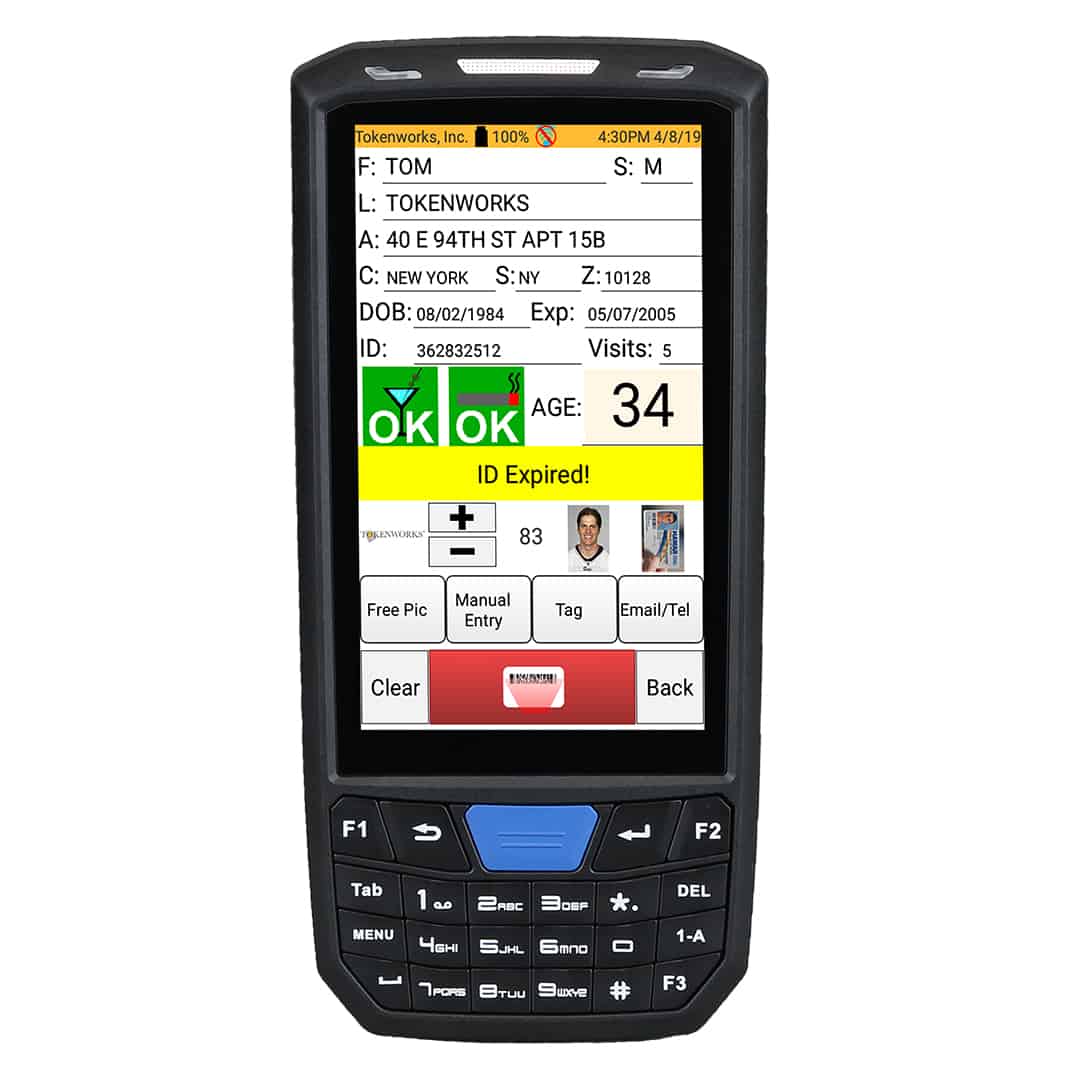
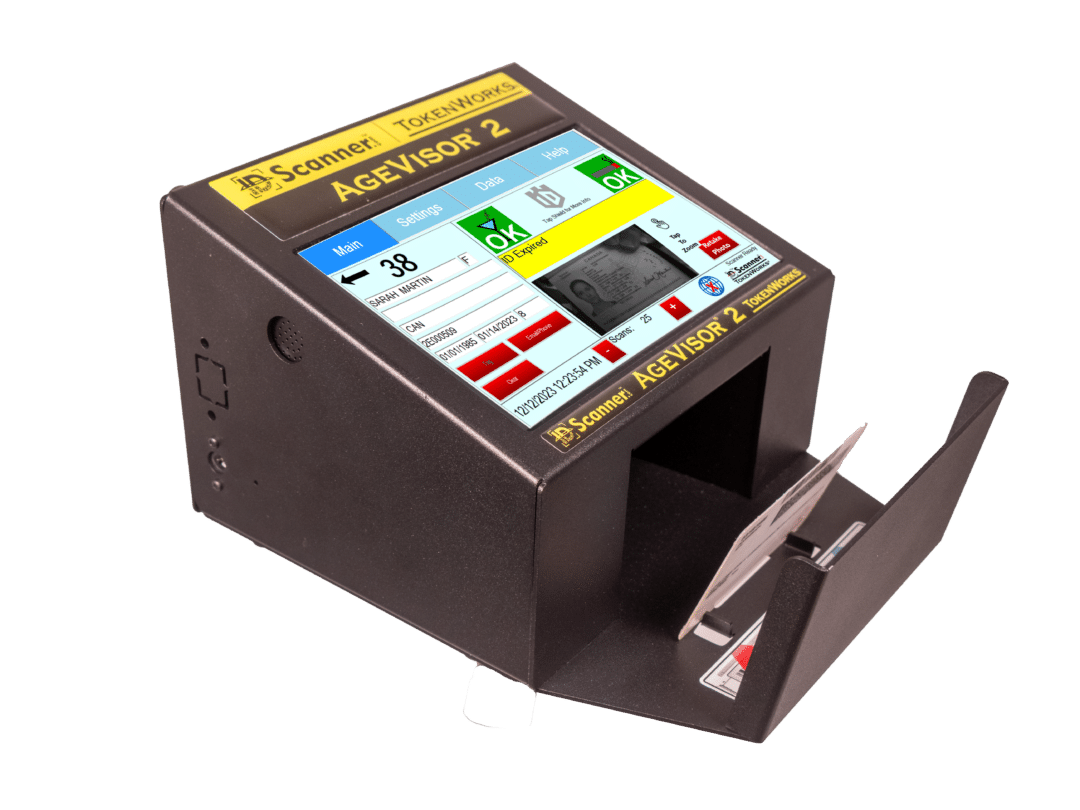
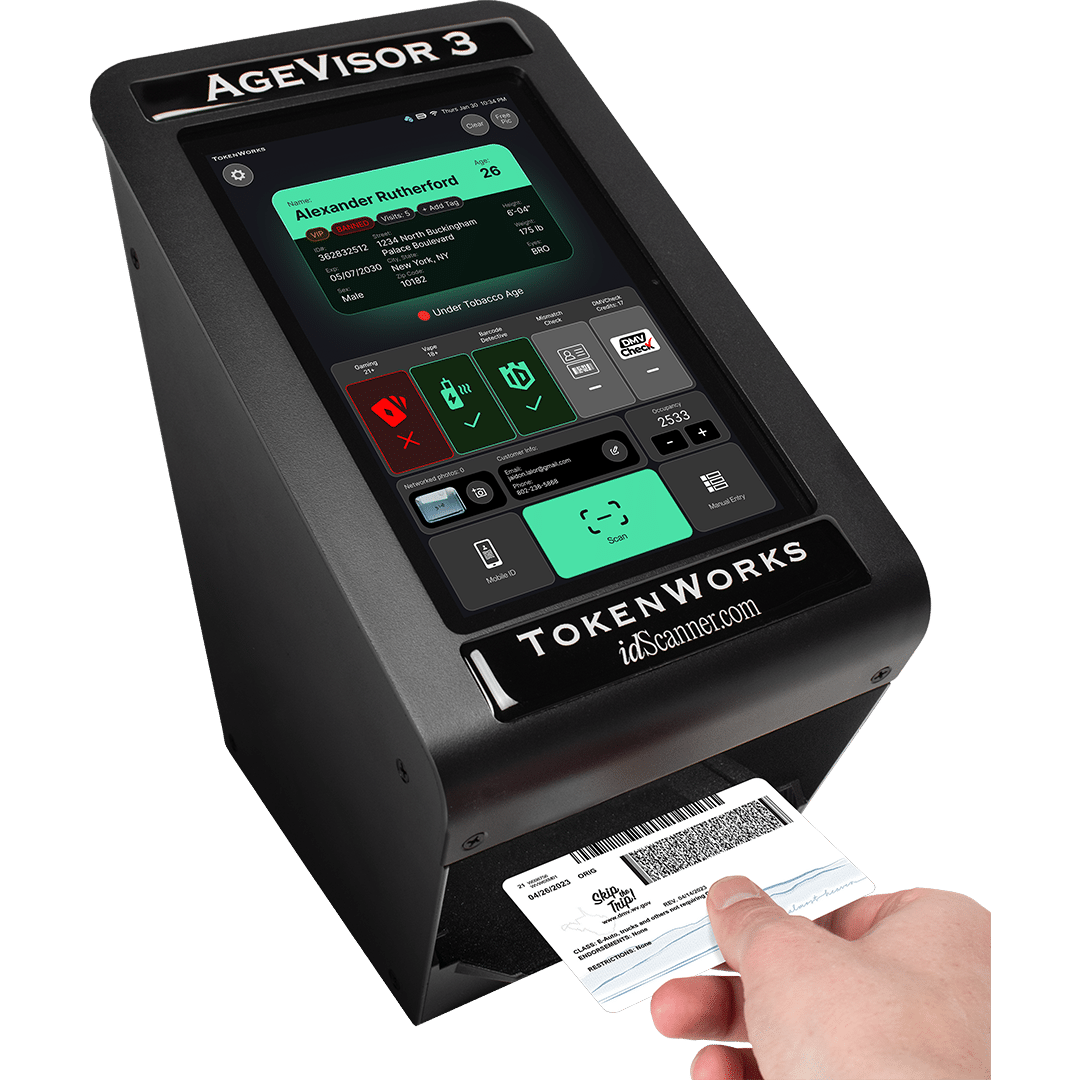
A “transaction scan device” is defined as a device capable of deciphering, in an electronically readable format, the information encoded on the magnetic strip or bar code of an identification card.
Pennsylvania law prohibits licensees or their agents from selling or disseminating information derived from a transaction scan to any third party, except to the Pennsylvania Liquor Control Board (PLCB), the Bureau of Enforcement, or law enforcement agencies. Licensees may retain scan data for compliance purposes.
Effective February 12, 2024, Pennsylvania requires amusement parks that hold a public venue license to use a transaction scan device for alcohol sales.
Amusement parks licensed to sell liquor and malt or brewed beverages under a public venue license.
Amusement parks may not sell or share any data from the use of a transaction scan device. However, the licensee is permitted to retain scan data to demonstrate compliance with the law to the Bureau of Enforcement.
Effective September 15, 2024, Pennsylvania requires retailers selling ready-to-drink cocktails (RTDs) to use a transaction scan device for age verification.
SB 688 expanded access to spirits-based RTDs beyond state-run liquor stores. Grocery stores, convenience stores, restaurants, and distributors can now sell canned cocktails containing up to 12.5% ABV, but retailers must obtain a Ready-to-Drink Cocktail permit.
Retailers who use transaction scan devices properly can claim affirmative defense if they inadvertently sell to a minor, consistent with the protections outlined in §4-495.
For a deeper look at what this means for your business, see our guide to Pennsylvania’s RTD cocktail law.
Pennsylvania law makes it a third-degree misdemeanor to intentionally and knowingly sell or furnish liquor or malt or brewed beverages to a person under 21 years of age.
These penalties are mandatory minimums and courts cannot impose lesser sentences.
Whether you operate a bar, restaurant, liquor store, amusement park, event venue, or convenience store, Pennsylvania’s ID verification laws affect your operations.
If you operate an amusement park with a public venue license or sell ready-to-drink cocktails under an RTD permit, you are legally required to use a transaction scan device for anyone who appears under 35.
Even if electronic scanning isn’t mandated for your license type, using a transaction scan device gives you the highest tier of affirmative defense protection under Pennsylvania law. This is a significant advantage in a state where the Liquor Code holds licensees strictly liable for service to minors.
With a $1,000 mandatory minimum fine for a first offense and $2,500 for subsequent offenses with no judicial discretion to reduce those amounts and the cost of a single underage sale is steep. ID scanners reduce that risk.
Pennsylvania’s Responsible Alcohol Management Program (RAMP) certification is relevant to licensing, penalties, and qualification for certain permits including the RTD permit. RAMP recommends that anyone who appears under 35 be carded.
Pennsylvania prohibits the sale or furnishing of tobacco products to any person under 21 years of age.
Pennsylvania offers affirmative defense for tobacco sales if the retailer can demonstrate that the business:
This affirmative defense may be used no more than three times at each retail location during any 24-month period.
While not directly related to alcohol or tobacco, Pennsylvania requires electronic ID verification for purchases of products containing ephedrine or pseudoephedrine.
This demonstrates Pennsylvania’s broader pattern of expanding electronic ID verification across regulated product categories.
Pennsylvania’s evolving legal landscape makes electronic ID scanning increasingly important. Whether it’s already mandated for your business or simply provides the strongest available legal protection, ID scanners help you:
Pennsylvania’s three-tiered affirmative defense framework explicitly rewards businesses that use transaction scan devices with the strongest level of legal protection. And as new mandates continue to expand the scope of required scanning, early adoption makes the transition seamless.
Pennsylvania imposes significant penalties for businesses that violate alcohol and tobacco sales laws.
The Pennsylvania Liquor Control Board may pursue administrative actions against your license, including fines, suspension, or revocation.
It depends on your license type. Amusement parks with public venue licenses and retailers selling ready-to-drink cocktails under an RTD permit are required to use a transaction scan device for anyone who appears under 35. For other licensees, electronic scanning is not mandated but provides the strongest affirmative defense protection under the Liquor Code.
Yes. Pennsylvania offers three tiers of affirmative defense, with electronic scanning (transaction scan device) providing the strongest protection. If a licensee scans an ID, the scan shows the ID is valid, and the licensee relies on it in good faith, no penalty shall be imposed, even if the customer turns out to be a minor. This applies to both civil and criminal prosecutions.
A device capable of deciphering, in an electronically readable format, the information encoded on the magnetic strip or bar code of an identification card. This is the legal definition used across the Liquor Code, including in the affirmative defense provisions and the amusement park and RTD scanning mandates.
For affirmative defense purposes, yes licensees may retain scan data to demonstrate compliance. However, licensees may not sell or disseminate information from a transaction scan to any third party, except to the PLCB, the Bureau of Enforcement, or law enforcement. Amusement parks face additional restrictions: they may not sell or share scan data at all, but may retain it for enforcement purposes.
The Liquor Code accepts a valid photo driver’s license or state ID (from any U.S. state), a Canadian driver’s license or Canadian-issued passport, a United States Armed Forces identification card, and a valid passport or travel visa that contains the holder’s photograph.
It’s a third-degree misdemeanor with a mandatory minimum fine of $1,000 for a first offense and $2,500 for subsequent offenses. Courts have no authority to impose lesser fines.
Yes, but the requirements are different. For tobacco, the retailer must demonstrate a comprehensive compliance program including written policies, documented training, posted notices, and disciplinary procedures. This defense may be used no more than three times per retail location within a 24-month period.
Affirmative Defense – Transaction Scan Device (47 Pa. Stat. §4-495(g))
Licensees who scan IDs using a transaction scan device have the strongest affirmative defense against charges for serving a minor.
Status: Active
Amended: 2002
Amusement Park Scanning Requirement (Act 49 of 2023 / HB 1096)
Amusement parks with a public venue license must use a transaction scan device for anyone appearing under 35.
Status: Active
Effective: February 12, 2024
RTD Cocktail Scanning Requirement (Act 86 of 2024 / SB 688)
Retailers selling ready-to-drink cocktails under an RTD permit must use a transaction scan device for anyone appearing under 35.
Status: Active
Effective: September 15, 2024
Underage Alcohol Sales (18 Pa.C.S. §6310.1)
Selling or furnishing alcohol to a person under 21 is a third-degree misdemeanor with mandatory minimum fines.
Status: Active
Amended: 1988
Underage Tobacco Sales (18 Pa.C.S. §6305)
Selling tobacco products to a person under 21 is a summary offense with escalating fines and potential license revocation.
Status: Active
Amended: 2019
Important Notes: Pennsylvania’s three-tiered affirmative defense framework explicitly provides the strongest legal protection to businesses that use transaction scan devices. Even where scanning is not mandated, it is the single most effective legal safeguard available to licensees.
IDscanner.com by TokenWorks is not a legal organization, nor should anything on this page constitute legal guidance. It is meant to be a list of resources and helpful links. Please consult your attorney before making any decisions related to scanning IDs in your state.